
Why pay-per-lead and commission-only deals collapse
Paying only for results sounds like removing your risk. It moves the risk, changes who controls the work, and reliably produces the leads you did not want.
Muhammad Usman · Co-founder and CTO
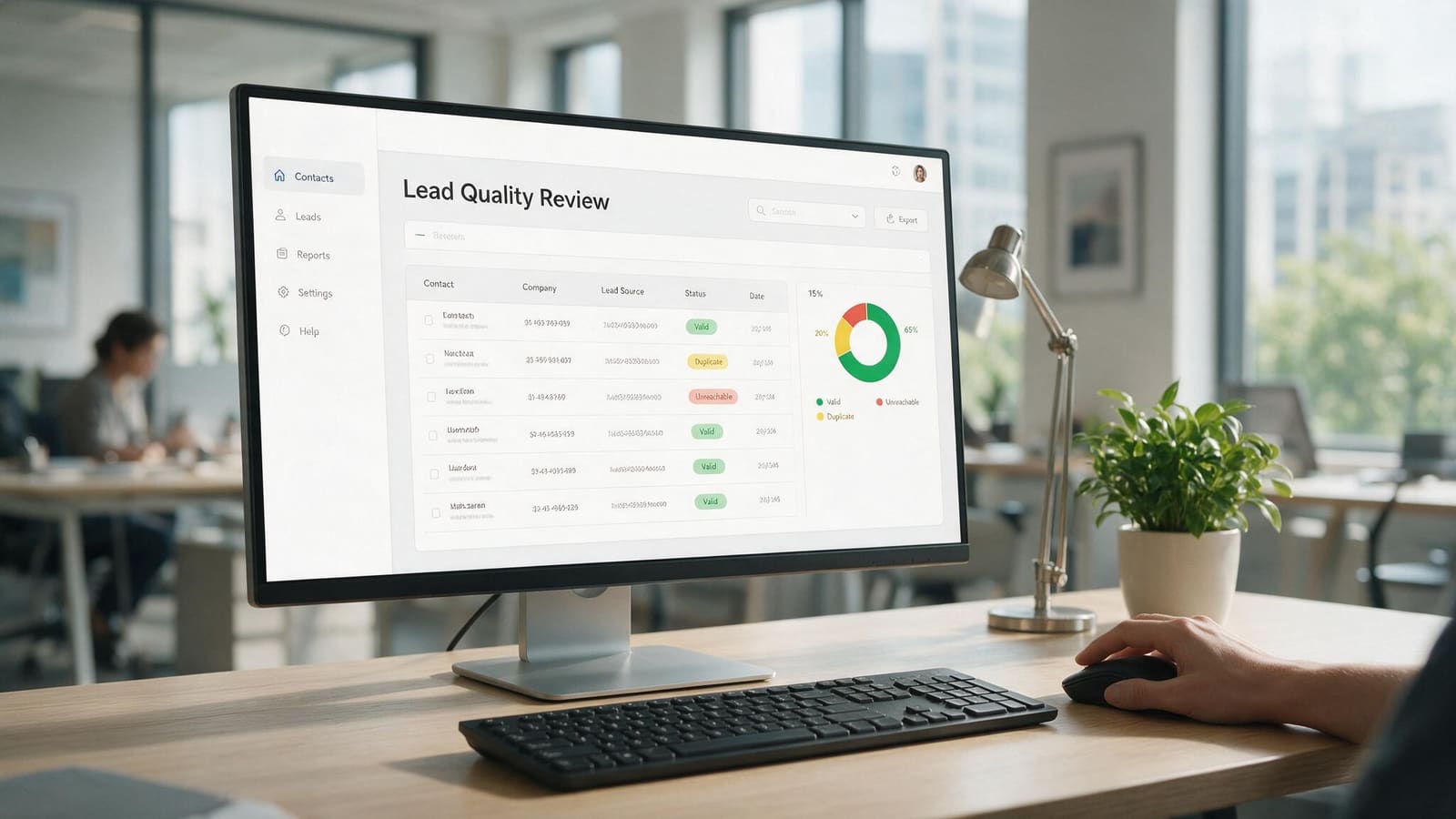
The proposal is always framed as fairness. You only pay for what you get, so you cannot lose. It appears in our archive from both directions — buyers proposing it to suppliers and suppliers proposing it to buyers. Here it is in a client's own words:
I am looking for someone to generate leads, and the payment is only for real clients. I can pay $100 for each client, but no upfront payment. I believe you can easily find 8-10 clients a month.
It reads as a risk-free offer. It is not risk-free; it is risk-moved. Understanding where the risk went explains almost every way these arrangements end.
Whoever carries the risk takes the controls
When a supplier is paid only on results, they have to fund the work from their own pocket until results arrive. That makes it their capital at stake, and capital at stake buys decision rights. They will choose the fastest route to something countable, because a slower route that produces better customers is a route they are financing themselves.
In practice that means bought lists over researched ones, volume over fit, and a strong preference for whatever the contract counts. Which brings the problem to its usual home: the definition.
The definition is where it breaks
*A lead* has to be written down precisely, because the moment money attaches to a word, both sides start reading it in their own favour. A phone number is a lead. Is a wrong phone number? Is the same person, submitted twice, in two months? Is somebody who explicitly said they were not interested?
There are 875 leads in this list but half or more are dead or non working numbers. Quantity doesn't count as much as quality.
That client was not cheated. He got exactly what the arrangement rewarded. Nobody had written down that a lead has to be reachable, so nobody was paid for reachability.
| Left undefined | What gets delivered |
|---|---|
| Reachable | Numbers that ring out or do not exist |
| In your service area | Enquiries from places you cannot serve |
| Matching your service | Anyone who filled in any form |
| Not a duplicate | The same person several times |
| Consented to contact | Data of unclear origin, and your compliance problem |
What no upfront payment selects for
This is the part buyers rarely consider. Refusing to pay anything in advance does not filter for confidence. It filters for availability — for suppliers whose calendar is empty enough to work for free for a while.
A supplier with a full pipeline has no reason to accept the arrangement, because they can be paid now for work of the same value. So the offer reaches the market in reverse order of how well the market is doing, and the buyer concludes the whole category is unreliable.
If you are going to do it anyway
There are situations where performance pricing is genuinely right: a well understood offer, a large addressable market, and a supplier who has done it in your sector before. If that is you, the arrangement survives on five clauses.
- 1Define the lead in a sentence with no adjectives. Reachable, in territory, matching a named service, not previously submitted.
- 2Agree a rejection process and a rejection window before anything starts. Not the mechanism — the window. Arguments happen over timing, not principle.
- 3Cap the monthly volume. Uncapped volume plus per-unit pay is an instruction to flood you.
- 4Require the source of every lead to be named. If nobody can say where a record came from, you cannot answer a regulator who asks.
- 5Pay a real fee alongside a smaller performance element. It buys back the decision rights, and it changes who the offer attracts.
The version that usually works better
Pay for the work, measure the outcome, and review on a fixed date with the right to stop. The buyer carries some risk, which is the price of keeping control of quality. The supplier carries some too, because the review is real and stopping is genuinely on the table.
It is less appealing than a risk-free offer. It is also the arrangement that is still running in year two, which is the only test that matters.
Questions
It does not remove risk, it moves it. A supplier funding the work until results arrive has their own capital at stake, and that buys them decision rights — so they will take the fastest route to something countable rather than the route that produces better customers.
Because they reward whatever the contract counts. If nobody wrote down that a lead must be reachable, in your service area, matched to a service you sell and not a duplicate, then none of those things are being paid for and none of them arrive reliably.
It filters for availability rather than confidence. A supplier with a full pipeline can be paid now for work of equal value and has no reason to accept, so the offer reaches the market roughly in reverse order of how well each supplier is doing.
In one sentence with no adjectives: reachable, within your territory, matching a named service, not previously submitted. Then agree the rejection window before work starts, cap the monthly volume, and require the source of each record to be named.
Pay for the work, measure the outcome, and review on a fixed date with a real right to stop. The buyer carries some risk, which is what keeps control of quality, and the supplier carries some because stopping is genuinely on the table.